Tuesday, September 16, 2008

Not Too Dam Bad!


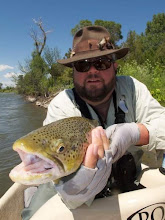
Po brownie


Dam nice 'bow!


Did you ever experience "deja vu"? You know, that sneaking suspicion that you've been somewhere before, or met someone before, or had the same experience, but cannot actually recall the actual experience? Ok, ok-maybe Monday wasn't exactly a deja vu deal. Just thought it sounded like a good lead into this blog post. What was the same: Chaz & I were back up fishing in the Poconos, in the same creek, same spot as last week. And yes, those big 'bows were still in the deep plunge pool below the dam breastworks. We had modest success. We changed tactics a bit, and maybe here is where all similarities end. Plus, I actually remember being there last week...and I didn't forget the beer this time on the way up to the cabin...and at least I remembered to call Chaz to pick up creamer for the coffee. So, again, maybe not exactly deja vu. In fact, there was some big differences.


First off, as I alluded to, we changed up tactics. There was more water being let out of the dam this week, too. We used removable sink tips, with some weight added. We went with the caddis larva pattern again in both tan & olive varieties. We were thus able to get down deep. I almost immediately hooked into a real nice 'bow as I demonstrated the proper drift to Chaz. He thought I was showing off, but really, I think I might have just gotten lucky. Plus just as I was bringing this guy to net, he freed himself from the hook. But what a nice fish! And (probably to Chaz's glee), I was not able to pull another one out of that spot the rest of the morning.

Chaz has been working on his nymphing techniques & really got some nice drifts through the runs below the plunge pools & breastworks. I think we are witnessing a true nymph fisherman develop right before our eyes. Yikes! God help us! Anyway, a smaller, narrow pool adjacent to the big concrete one I was fishing is filled with gushing water from the lake through a single opening. I'd been eyeing that place up since last week. It is deep & quite capable of holding some of those big trout. Chaz had been working that spot for some time. He hooked into, but lost, a decent fish. Later, he pulled in a couple of sunnies, and then moved downstream between the concrete bridge abutments that I have mentioned in other posts. He had mentioned that something big had gone after one of the sunnies as he brought it to surface. No doubt, one of those big trout. As Chaz worked the abutment run, I changed over to a minnow streamer pattern & went to work in that narrower dam pool.

I still had the sink-tip & the split-shot on, but I shortened up the leader a bit & converted over to a 2X tippet for the streamer. I switched to a streamer because Chaz got a reaction from something big when he brought in that sunny. Those bruisers might just want some type of bait fish, which the minnow pattern imitates well. A few short tuck casts right up the gut, with quick strips to keep pace with the current turned up nothing. I quartered a tuck cast up into the current seam to get a good drift. I was not imparting any kind of retrieve here, just letting it drift deep down. Before the fly got across from me, a heavy rainbow banged that streamer hard. He put up a nice fight, & before long, a nice, hefty 'bow was in my net, thanks to Chaz, who netted him for me. The spot in which I was standing was a bit precarious: just a ledge jutting out from a retaining wall that separated the narrow pool from the big one. So, maneuverability was almost nil here. After that, we took the rest of the afternoon off, till around 4:30.

The late afternoon/early evening saw us at the junction of the Po & the Lehigh River, near Parryville. Chaz worked the Lehigh in the riffs below where the Po enters the river. I worked a pool & some short runs just upstream in the Po. I saw a few bugs coming off & thought maybe a rusty spinner might work, but first, I went with a cahill-looking pattern dry fly. It was the only thing I had to match the size (#12 or #14) bugs I had seen, even though the color was different. Plus, it really was not a match the hatch situation anyway. It could even match a tan caddis if any were around lately. I threw a few casts up into the current, got a few good drifts, and then, "Bam!" a nice 12" or 13" brown nailed it. It was the last fish either of us caught. As the light started to fade, we called it quits. After all, fly-fishers can be Eagles fans, too & the Birds were playing their arch-enemies: the hated Dallas Cowboys on Monday Night Football (Hey, I'm from Philly-whaddya expect??). Some baetis, sizes 22/24 were rising in the fading light, as were some tan caddis, sizes 12/14 (go figure!).

Even though we really had to work harder for the fish this week, it wasn't too "dam" bad after all!!

Tuesday, September 9, 2008

Pocono Report


Chaz & I hit some Pocono streams on Monday. We did well on a private section of the Tobyhanna, which we both fished back in early July (see July 29 post). Chaz hit some pocket water downstream from a dam. After a few creek chubbs & panfish, he was rewarded with a nice rainbow, who couldn't resist a dry-fly gliding through the pockets & swirling currents of this stream. It may very well be his first really nice trout on a dry, but I could be wrong. I knew he must have been fishing pretty hard, because I saw neither hide nor hair of him for several hours. I was hoping that that was a sign that he was busy catching fish! Meanwhile, I was investigating a section where we had done very well last time. It is a run between two old bridge abutments, the remaining ruins of the original dam. The water was a bit lower than it had been, as was expected, but not significantly so. Chaz had fished this section only a week or so before with his dad & said it wasn't as productive as it had been. I wondered if the fish had moved up nearer to the dam, or into the man-made plunge pool below the dam. I tied on a tandem nymph & indicator rig, getting some drifts through the run. A somewhat large creek chubb & some small panfish obliged me, but nothing more. I headed upstream & began fishing the deep concrete plunge pool below the dam, and was I immediately rewarded with a hefty rainbow. "Aha!", I thought. "So they really were in there, after all." I was able to land five nice rainbows, 2 of which were in the 16"-18" range, as well as three in the 13"-14" range. All had nice color & girth to them. A few more may have been bigger still, breaking off my tippet at the fly. So, they have a souvenir from our battle! I needed to change tactics here, though, due to the sheer depth of the pool. First off, the tandem rig & the indicator had to be dispensed with. The first fish (which nailed the tail fly) unfortunately got foul hooked on the dropper fly. Also, the indicator became a hindrance, because it prevented me from reeling in more line to land the fish, although I did actually land it. The tactic was simple: putting more weight on the leader, casting a tuck cast straight up into the current, in or below the white water, or quartering upstream into the seam, followed by a quick mend, & following the leader with the rod tip for the rest of the drift. The key here was getting that fly down deep. I experimented & found that when I did not get it down deep, I almost never got strikes, but when I did, I almost always did. Also, lifting the rod as it finished the drift was key in getting strikes, at times.
A better method would be to use a sinking line in this section, or at least a sink-tip, which I did not have with me at the time. This would have certainly ensured that the fly got down consistently to the bottom & thus, to the trout below. I believe that there were some big brownies down there, too (they were in the creek in July), but I did not catch any. Maybe one of those bruisers that broke off my fly were one of those big guys. Also, the fly of choice was a caddis larva pattern in olive or tan. Those trout slammed that fly with abandon.

Part 2 of the day began too late & ended too early, thanks to Yours Truly. We wanted to hit the Big Bushkill up near Resica Falls. I fished this stream in early May. This area is stocked in the spring & it is open to the public, but only fly-fishing is permitted here. I had some good success here & this was a challenging place to fish, as well. But, the memory is starting to fade in the Chief-man. On the way, I drove up the wrong road, with Chaz following me. I'm glad he's a patient guy, because we had to do some major backtracking before we got back to the correct road. Finally, we arrived at the stream, but the sun was sinking fast. Again, like the Toby, this stream had less water, but that was to be expected. Chaz wanted to use a nymphing/indicator rig, I was going with a rusty spinner dry-fly setup. Lots of boulders here. When you arrive in this spot, you are standing on the top of one of several large, flat boulders. From here, you can make your casts into the current below. Below in the stream, there is a flume, through which some nice, cold oxygenated water flows. Below the flume, the current flows into a wide, calm section of the stream. A large boulder juts up in the middle of the stream. This area is very deep & has tons of submerged rocks & boulders, which prevents wading. This part of the stream almost appears as a mini-lake within the stream. It is almost perfectly round here & the banks are all formed by rock. The only way to fish in this immediate area (besides fishing from the flat boulders above) is to climb down to some smaller rocks & boulders below & try to cast up into the current seam, which meanders its way down, around the big boulder in the middle. It's a bit tricky here, because you cannot wade closer & some trees behind will grab your fly if you are not cautious on your back cast. In the spring, I saw rises all throughout this area, tan caddis being the fly of choice. The stream funnels its way slowly downstream, as the large "pot-belly" shaped lake-within-a-creek gives way to the classic, mountain stream once again. Downstream, some more boulders & pocket water & some small falls.
Although we didn't land any fish, we saw a few splashy rises near an undercut in a boulder that serves as part as the stream bank across from us. That makes sense, because the water eddies around in that spot, delivering food like a revolving smorgasbord. And you have all that oxygenated water from the flume above. If I were a trout, I'd hang out there, too.
Upstream of the flume section, you have plenty of promising, boulder-strewn, classic-mountain pocket water. We ran out of light, and couldn't see the tippet anymore when we tried to tie on a new fly, so we left this spot for another day. I'm thinking that with a bit more rain, and some cooler fall temps, this spot might be worth checking out again in the near future.

Tuesday, September 2, 2008

The Po Revisited


Click on chart to view


My buddy Charlie (aka, "Chaz") & I were back again in the Mahoning Valley, checking out different places on the Pohopoco Creek on Labor Day. We fished a small section not far from Gilbert, PA, but didn't have too much luck. Another spot a few miles down the road seemed very promising: a good number of decent sized trout lurking in the shadows of one hole convinced us both that finally, we had found the "honey hole." These shadowy figures were put on edge a bit as Chaz did his best to slip into the water & work a drift through the hole. His position was good; he was out of sight under a tree. He had a tandem rig of a deer hair caddis with a small beadhead nymph trailer that he cast slightly upstream, trying to get a good drift. I served as spotter from above at the bridge & tried to get him to get the right presentation, as he had done for me earlier. Suddenly, Chaz noticed a posted sign, & we got out of there.
The next spot was an area near Rt. 209, right off of Pohopoco Road, that rumbles its way down along Rt. 209, on its way towards the Lehigh River. Good nymphing water, the water was at optimal temps (52 degrees), running too high & too fast, due to a dam release from Beltzville Lake. Not quite sure why. For more on this, check out "Fly Fish PA" link & look at Stream report dated September 2. I will definitely check out this spot again. The hole at the junction with the Lehigh looked pretty good, but it was midday-not a good time to wet a line. At least our research was completed.
All in all, a better day fishing than catching.

Wednesday, August 27, 2008

The "Po Boys" Cometh


"The Po" Little Po rainbow fingerling


My friend Charlie & I were like men on a mission this past Monday, as we hit the Pohopoco (pronounced: "po-ho-PO-co") Creek near the Beltzville Lake. The "Po", as it is affectionately known to many anglers, is a very unique fishery. Flowing out of Pohopoco Mountain in Monroe County, PA, the Po winds its way southwest through the Mahoning Valley, through various hamlets like Kresgeville, Trachsville, etc. near Rt. 209 before flowing into the Beltzville Lake. The Po in this section is a wild trout stream, often rated as a Class A Wild Trout Stream by the PAF&BC & is home to some beautiful wild browns. From what I hear, 12"-14" is a common size, though I've heard larger trout inhabit the Po, as well. My experience fishing this section is quite limited. A popular spot on the Po is below the Beltzville dam, which gushes a good deal of cold water into the stream & maintains it's temps in the 50's all through the summer months, no matter how hot the air temps may be. This stretch is stocked at least twice in-season. This is where Charlie & I began our day. Charlie, despite having seen this stream many times, had never fished it. We arrived around 8AM & had the place to ourselves pretty much all morning! We fished through some light rains that passed through on several occasions during the course of the morning. The Po did not disappoint with plenty of surface activity, though we couldn't see what the fish were rising to. I had fished this section many times & I knew that lots of midges were present on this stream. I suggested to Charlie that a size 22 or 24 Griffith's Gnat might be the fly of choice. I am not often right about much of anything, but thankfully, I was this time. Charlie & I quickly got into these trout. What we caught were tiny fingerling rainbows, brookies, & browns, likely stocked in the spring or sometime during the summer. They were fun, but after a while, we wanted to see if we could hook into something a bit bigger. Having no luck catching anything but these baby trout, we said goodbye to this area & went out on a search for new waters.
I had heard that the area above the lake, that is, where the stream enters the lake, is pretty good water. Charlie & I went out looking for it. Many of the sections we encountered, unfortunately, were posted. We wound up fishing a bridge pool near the Shell gas station on Rt. 209 (which is below where we had fished in the AM). We saw plenty of trout holding in the pool & thankfully, most were normal sized, certainly bigger than the 3"-6" variety we caught earlier. I knew that this mid-day attempt would probably be an exercise in futility, & I was once again on target. We tried nymphs, streamers stripped hard, & even a few dry flies before giving up for an afternoon rest, which never saw us get back out onto the stream again that day.
The Po flows from the dam, down along Rt. 209, before crossing over & down beneath Rt. 248, before meeting the Lehigh River. I have fished the Po at its junction with the Lehigh. I have also fished upstream from there, up past the 248 bridge, close to the village of Parryville, PA. This is a section that I enjoy fishing. I have done particularly well there in the evening during a nice Sulphur hatch a few years ago. This past spring, I caught a few nice browns during a hatch of small Blue Winged Olives. On both occasions & others, the fish were in the 14" range.
But, one of my goals this year was to fish places I have never fished before, hitting some new waters & gaining new experiences. Part of Monday was for Charlie & I a wild goose chase, searching, backtracking, & eventually getting disappointed when we encountered posted land, or water that was not productive. But, despite all of this, I think it was well worth it. Did you ever drive on a road you've never driven before, just to see where it will take you? Part of the fly-fishing learning curve, I guess, isn't always about bettering one's skills with a fly rod, or having success in catching fish. Part of the learning curve is discovering new waters, trying new spots, finding out where one can fish. This involves research & going out looking for different spots. Knowledge of a stream comes from experience & fishing new spots. As the old saying goes, "You live & learn." There are sections of the Po (and other rivers, too) that I have now seen, have found were not posted, & looked to be very "fishy" spots, but I have yet to fish them. Time will tell whether they are good stretches or not, but that's why we go out: it might sound corny to say it's an adventure, but in a certain sense, isn't it? Isn't there a part of our fly-fishing psyche that looks to find new waters, to be on an adventure? We make a mental note of a particular hole, or run, or a section that catches our eye from the road & we tell ourselves that this looks like good water. We are careful about what we say about it & with whom we talk about it. It's like a secret place that we want to go to & discover, even though in reality, it may be a very popular, well fished area. Maybe it's still a good hole, maybe it's not. Others may have been able to tell us, "Don't waste your time on that stretch." But how will we know for sure? The experience of trying the new waters for ourselves is what keeps us going sometimes. If it turns out to be a "honey hole", great. If not, well, at least we know. I am grateful that I have been introduced to by others & have discovered on my own, some new waters this past summer. Sometimes, like the Po, the creek/river is not new, but some parts of it are. Others are completely new & beg for more exploring. It's that unknown element that keeps us coming back.

Friday, August 22, 2008

Trico Time - Lehigh Valley Style

I had the pleasure of fishing the Monocacy Creek up in Bethlehem,
PA with Ed Hart yesterday. Ed is a podiatrist from Bethlehem & knows the Monacacy like the back of his hand-or the back of his foot? I met Ed & his son, also named Ed, out on the Madison River in Montana in June. Not only was Ed from Southeastern PA, but grew up in the Olney section of Philly. He couldn't get over meeting someone else with an Olney connection all the way out in Montana, nor could we. Ed was also nice enough to leave us his park pass to Yellowstone National Park with the hotel concierge before leaving Big Sky Country (lots fly-fishing guys in the same hotel!). Anyway, we planned to get in touch over the summer & get together for some fly-fishing in the Lehigh Valley. Ed's pride & joy is the Monocacy Creek. You could see how excited he was as we approached the stream, happy to show me some of the best spots he knows. I had only fished the Monocacy once before: last spring. I didn't have too much success there, either. This stream is by no means any secret. It is well known & well fished by locals & even non-locals. The Monocacy is a Lehigh Valley limestone stream that maintains its temps around the 50's pretty much year round. It boasts a very healthy & diverse environment for trout. Although the stream is stocked a few times a year, it is able to sustain a viable wild trout population & is designated with a Class A Wild trout distinction by the PAF&BC. A recent biology study conducted by the PAF&BC showed very good results & a nice trout poulation. This will be available in full soon on the PAF&BC website. As for the fishing, we arrived on the stream a little after 6AM. Ed put me in a spot he told me would really come to life during the spinner fall. He assured me that all the water from there upstream past a concrete bridge was some of his favorite water. He fished downstream past another bridge.
I worked my way upstream with some nymphs. It was a cool morning for August, high 50's. The Trikes were probably affected by this & we did not see them doing their mating flight until maybe 8AM or so. Needless to say, the fishing started out a bit slow. I worked my way upstream methodically using a small baetis nymph, getting short drifts, quartering upstream & drifting down, or straight across towards the banks. By 8:30, the Tricos were swarming up in the air pretty good. I changed up my tactics & my leader a bit & tied on a parachute style Trico that Ed had supplied me with earlier. I started to fish a bit upstream when Ed returned. He told me he had no luck down below, but said there were a lot of bugs in the air where I first started. I cast the little parachute trike upstream & was rewarded with a nice little brown, who unhooked himself just as I was about to pick him up & before Ed could get a photo.
We took a break & Ed showed me some good spots upstream, which were presently occupied by some old-timers, who said they hadn't had any luck. We went back down below to where I started the morning & tons of trikes were dancing in the air.
After a little while, Ed bid me farewell & I continued to fish. Already we had begun to see a few rises. It was just after 9AM. Not long after the water began to come alive with rises & with fishermen. The two old-timers had made their way downstream to just above where I was standing. After a real bad hangup, which included some leader rebuilding & tying on yet another trico fly, one of the old guys asked if he could pass by & fish below me. I told him sure & I got back to work. I tried the female pattern with a cream-olive abdomen. Although I had a few hits & near hook ups, I didn't do nearly as well as I did with the smaller black pattern with white poly wings that represents the male trico. Two fish were rising petty consistently about 30 feet upstream. An old guy in a straw hat had tried but failed to coax these feeding fish. After a few casts, I hooked & released one of those nice little brownies. Rises were appearing all over the surface. I tried to hit these different spots where I saw rising fish, even in some shaded spots near the bank in front of me, but no cigar. Those rises upstream kept up, so I put a few more casts in the seam just to the right of where I caught the other one. I got a few good drifts & once again, a tough little brownie nailed the fly. All three fish had beautiful color & markings. When I turned, I saw that the other guys had left. I don't think that they had caught anything. I guess I should consider myself lucky that I had the success I did. Sometimes good things come in small packages!

Wednesday, August 13, 2008

August Update

So far, August has been mild around here in PA. This is certainly a welcome boon for flyfishers. Cooler air & water temps means less stress on the trout & more comfort for the flyfisher. On Monday, I fished a small private pond with some friends in the mountains of Northeastern PA. Weather was unstable with rain, sometimes heavy, coming & going. Headed out early for the pond. With the mist still obscuring most of the water's surface, I lined up, made some leader adjustments, & tied on a hair bass popper. Hooked & landed 6 largemouths, 2 of which were pretty nice sized fish. Lost a few, one freed himself by pulling my leader under a sunken log. Each struck violently at the popper or diver pattern & fought nicely. Fished till about 9AM. Returned around 10:30 with my friends. Got a spunky little sunny, but nothing more. Very slow. Of course, it was near mid-day-not the greatest time to be out. I tried sink-tips & regular floating line rigs with zonkers, buggers, bow river style zuddlers, floating line with poppers & dahlberg style divers. Nothing doing. But, it was just good to have a fly-rod in my hand for the 1st time in 3 weeks! Last cast around 6:30PM. Got a small largemouth on a popper. At least I ended on a positive note. Next week, I'll explore the Trico hatch somewhere in the Lehigh Valley. Hopefully, the weather will still be cooler as it is now. Tight Lines!!

Wednesday, August 6, 2008

August: A Month of Extremes


For the flyfisher, August often means working at polar extremes. On the one hand, the devoted trout fisherman has limited choices. Extreme heat & often high water temps in the freestoners means seeking out the spring creeks & limestoners that keep cooler during the summer. Usually, hatches & fly selections are limited, as well. Tricos - tricorythodes stygiatus - for you bug nuts, are tiny mayflies that hatch early in the morning & continue their mating flight into mid-to late morning. Here in Southeastern PA, many streams, especially the limestoners, boast heavy Trico hatches beginning at the end of June and extending well into October or November, or whenever the 1st frost arrives. Tricos represent one of August's extremes: they are extremely small, require precise imitation & presentation. This is because by the time the hatch has gotten underway for the 1st few weeks, trout become extremely picky & persnickety about the profile, size, even the color (females have a cream colored abdomen; males-your basic black.). At the start of the hatch, sizes 20 thru 24 are usually the ticket. The larger sizes should be used to imitate the female, the smaller sizes for the male. By the time August rolls around, trout will turn down those 20-24's in favor of 26's, 28's & even smaller! This is because the insects themselves have gotten smaller over the course of the hatch. It can really mean some careful, eye straining threading of your tippet & fly.
That brings us to another extreme: your leader. I know guys who will use nothing less than an 18' leader to fish Tricos. Of course, this is really pushing the envelope, but it does work for them. Usually, though, something like a 12' to 14' leader is the norm for many Trico aficionados. But many trico streams I fish are small. A really long leader may not work so well on smaller streams. My philosphy: use the longest leader you can get away with, given the stream & conditions you're dealing with. Depending on the weather (another often extreme factor), "Trikes" will hatch & begin the mating ritual sooner or later: sooner on warmer or hotter days, later on cooler fall days & when it rains. Expect spinner falls by 8 or 9AM when it's hot, between 9 & 10AM on cooler mornings, and even later as Fall progresses. Most flyfishermen will fish the spinner fall, but nothing else. Getting on the stream early is imperative & often the difference between success & a disappointing day on the stream. Also, experiment: don't just fish the dead spinner imitations. Try using some dun patterns early on & changing over to a spinner that sits upright in the current. Also, try sunken spinners which drift beneath the surface. Sometimes this is all it takes to get those trout interested again.
Tricos are one extreme. If you are strictly a trout only flyfisherman, it may be your only option, besides fishing hoppers & other terrestrials later in the day. However, August can throw some extreme heat & the early morning may be the best time all day (night fishing notwithstanding). But, if you are just itching to get out & fish, don't feel like threading near-invisible tippets into even less visible hook-eyes, maybe yet another extreme is just what the doctor ordered. Moving from the cold water confines of the salmonids & into the warmer waters of bass, panfish, pickeral, et al., the aforementioned info on Tricos goes out the window: we move from the extreme of the miniscule to that of the grandiose. Longer & beefier rods, heavier lines, thicker & stouter leaders, big, heavy bass flies & poppers all become ingredients for fishing in ponds, lakes, & streams where these warm water quarry lurk. Bass & panfish can be a fun & exciting alternative (I did NOT say replacement!) for trout fishing in August (and all the summer months for that matter,). There are many places in Southeastern PA & throughout the state that offer the fly-fisherman the opportunity to seek out these warmwater fish. Largemouth bass, pickerel, & pike often make viscious attacks on a hair popper, zonker, or minnow pattern. And sunnies & crappies can give nice little fights, as well. In upcoming posts, I will include some of the patterns I've found most helpful in trico & warmwater fly-fishing. If you are fishing a pond or lake from the bank, you can cast parallel to the bank and strip the popper or subsurface pattern toward you. Try varying the retrieve & pausing. If you pause, get ready for a violent strike. Often that is what the bass or one of its "colleagues" is waiting for. If you're fishing from a boat, try to fish near structure-fallen logs, drop-offs, weed beds. Many times, you will be aiming your casts toward the bank & strip in the line. Sometimes strikes will occur not far from the boat: the fish will almost always follow your fly to within just a few feet of the boat before attacking it. Also, fishing near docks, whether in or out of a boat, can be very productive, especially very early in the morning or at sundown. Bass & other warmwater species use the shade of the dock for shade & cover. Use the same techniques described above.
Your leader should be only 3 1/2' to 5' in length, depending on the circumstances. This is necessary for turning over big bass flies. Usually 7 or 8 weight lines are good for bass, pickerel & pike. 6 weight is good for panfish. Some like a 9 weight if they are specifically targeting pike or musky. You may need to check with your local fly shop about special leaders designed for these toothy fish.
There are a ton of different types of flies for warmwater flyfishing. Poppers, zonkers, clouser minnows, big pike flies in all sorts of varieties are out there. Smaller poppers designed for panfish are available & popular, as well. One thing to look for in buying or tying your own flies: make sure they have a weedguard. Weedguards, usually made of thick monofilament, will prevent snags. Some flies are tied with the hookpoint in the upright position. This, too, helps reduce snags. So, what extreme will you tend toward: the Trico savvy trout or the larger than life warmwater critters? Either way, whatever the extreme, both forms of fishing will bring you one common denominator: you will enjoy the fishing & will be extremely rewarded for it! And remember, August offers both extremes: be sure to try them both.